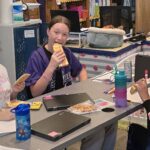
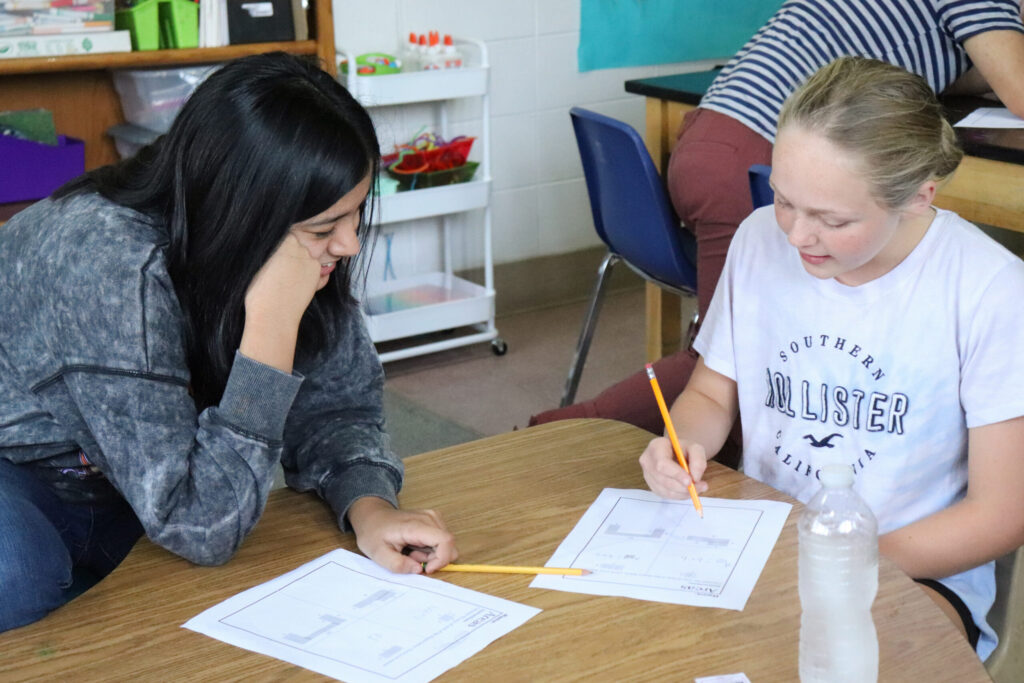
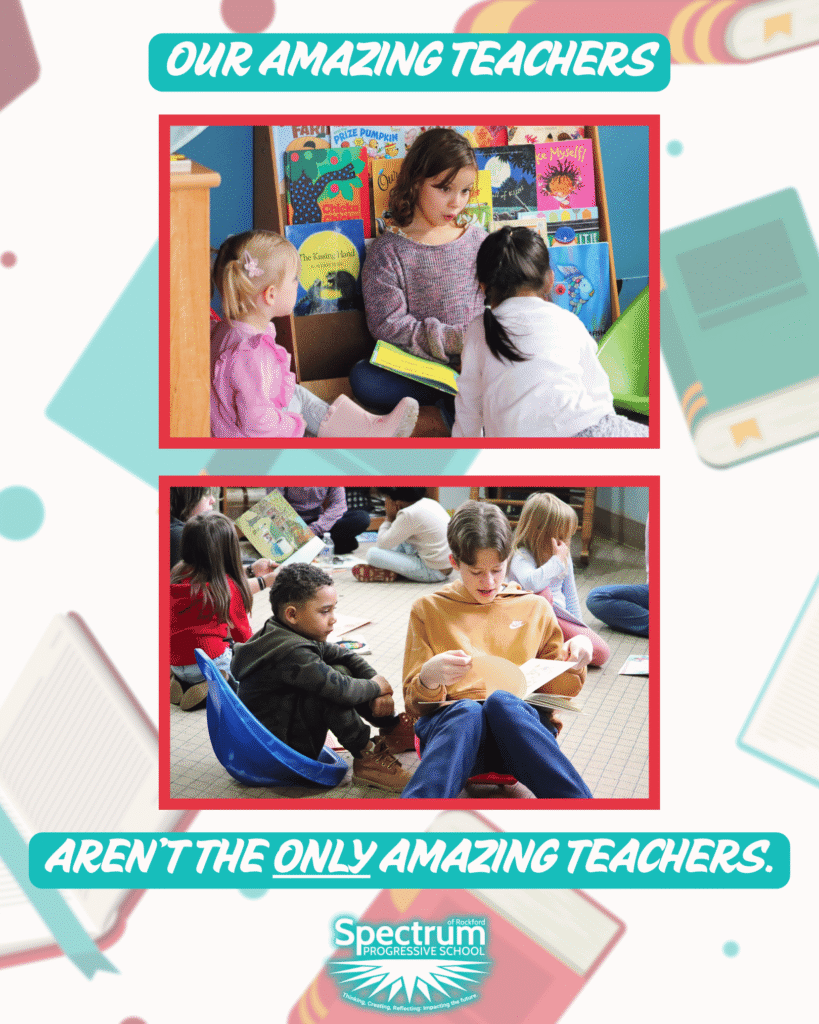
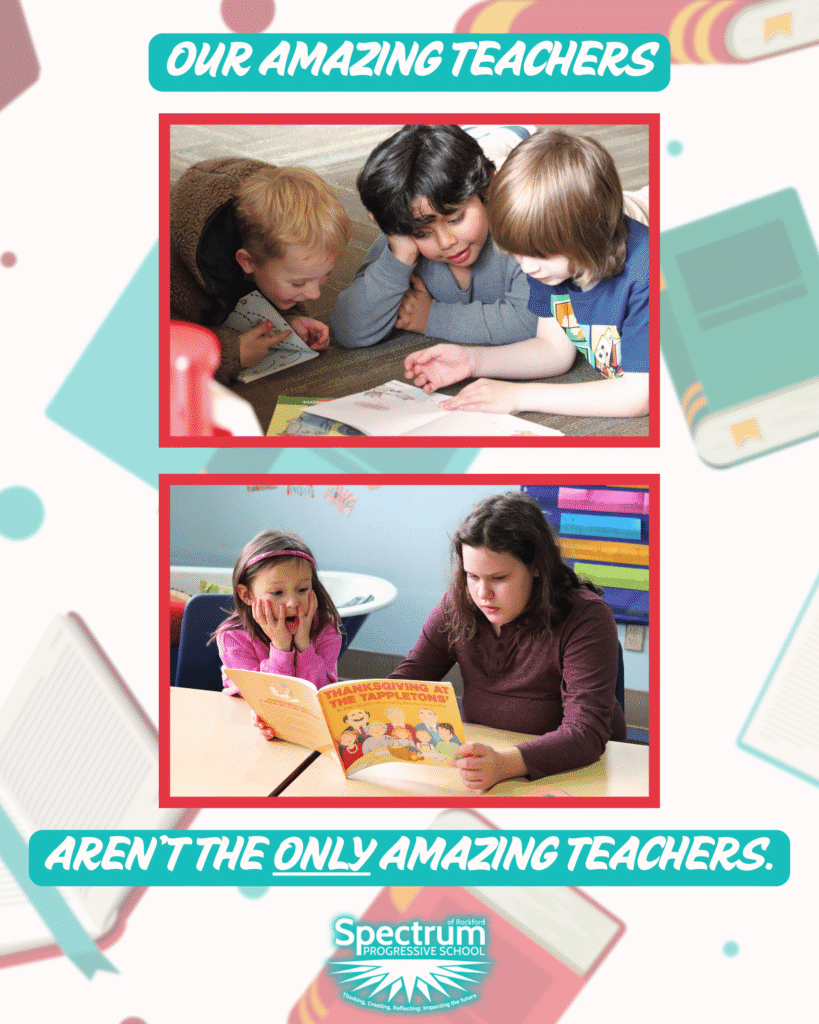
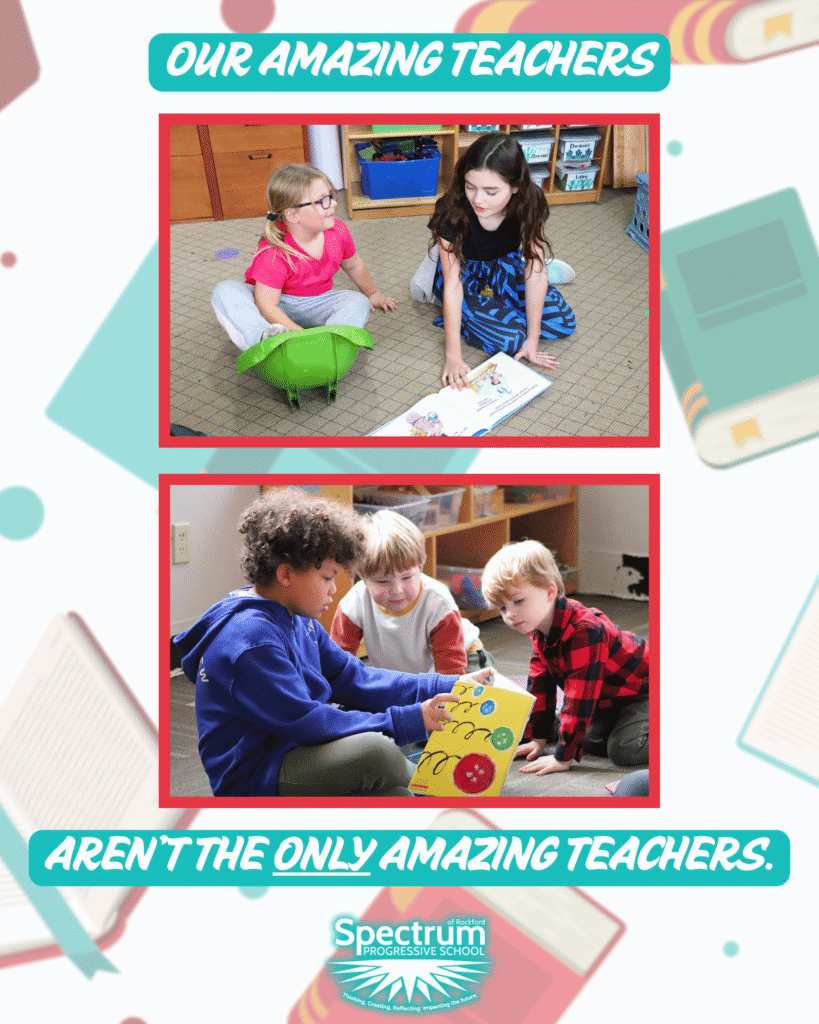
At Spectrum, multi-aged learning creates a classroom environment where students can learn with and from one another. Younger students benefit from seeing older peers model skills, routines, and problem-solving, while older students deepen their own understanding by explaining concepts, helping others, and taking on meaningful leadership roles.
Beyond academics, students have opportunities to practice communication, responsibility, cooperation, and confidence in an environment that reflects the world beyond school—where people regularly learn, work, and interact with individuals of different ages, abilities, and personalities.
Rather than simply being grouped by age, students are given opportunities to contribute, lead, encourage, and grow together. This shared learning experience helps older students become positive role models while giving younger students examples to look up to and aspire toward.
This form of interaction encourages connection and learning between levels, flexible groupings and increased movement between groups. In addition, multi-age groupings provide: